Duration
- 1 month
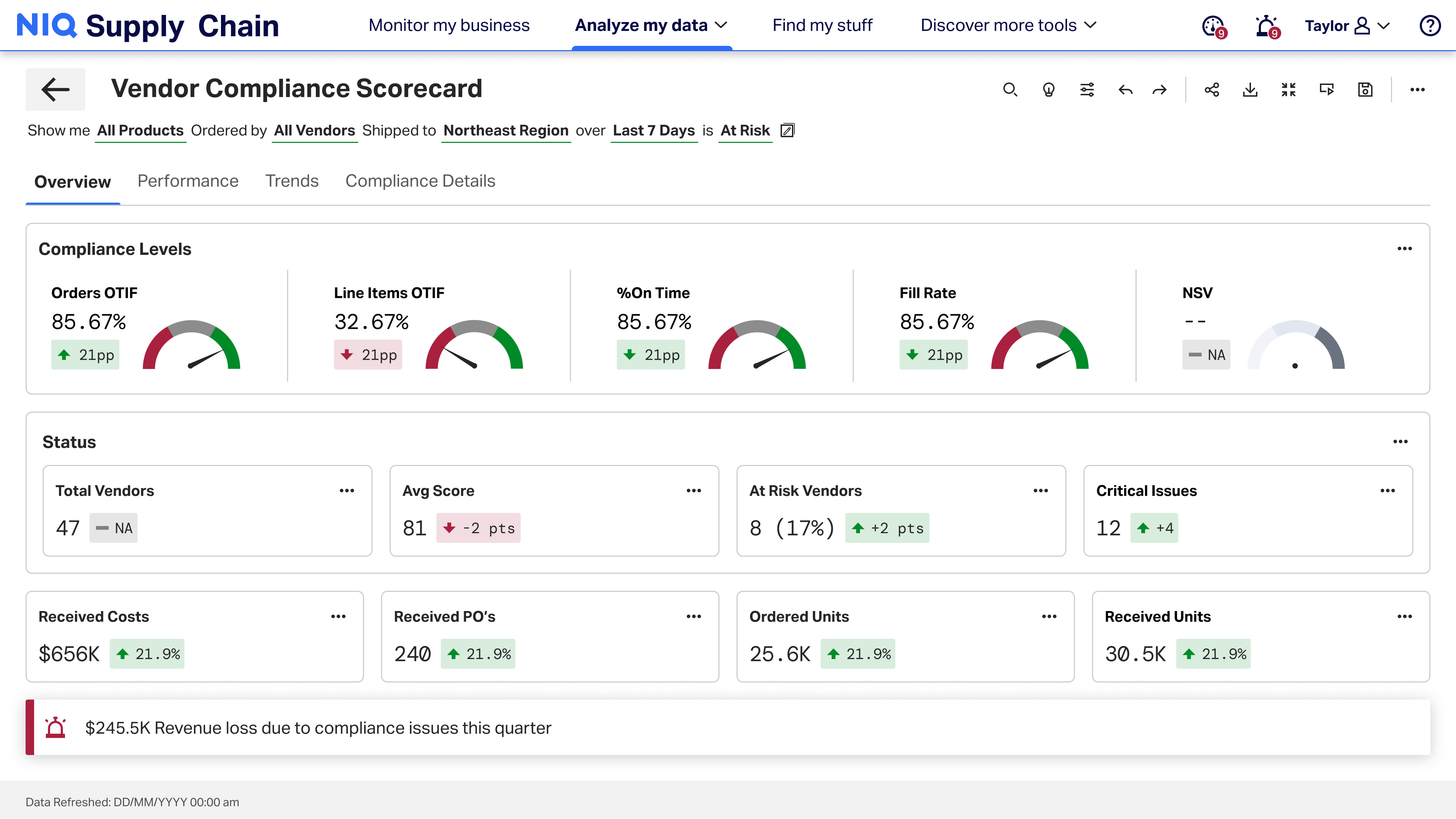
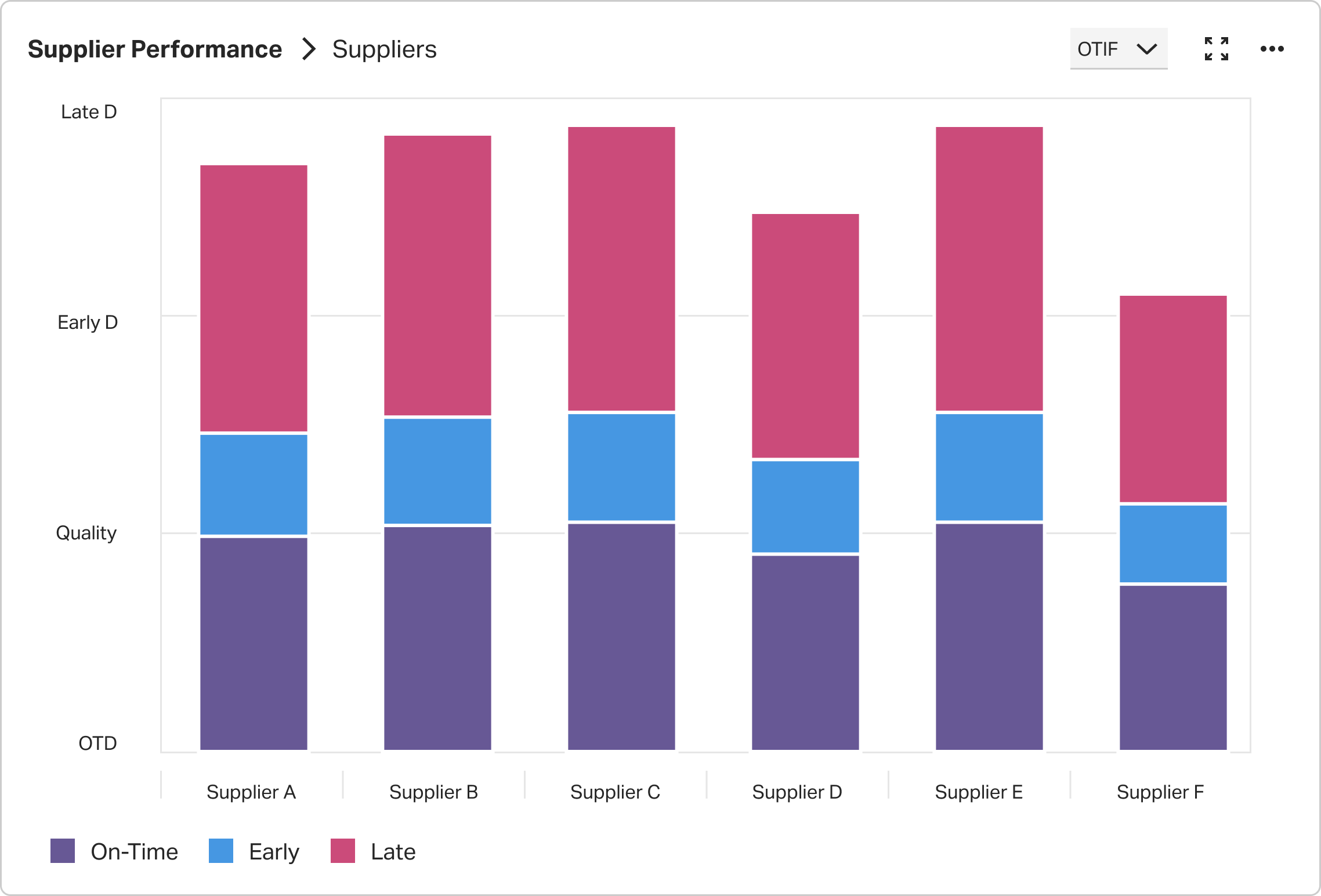
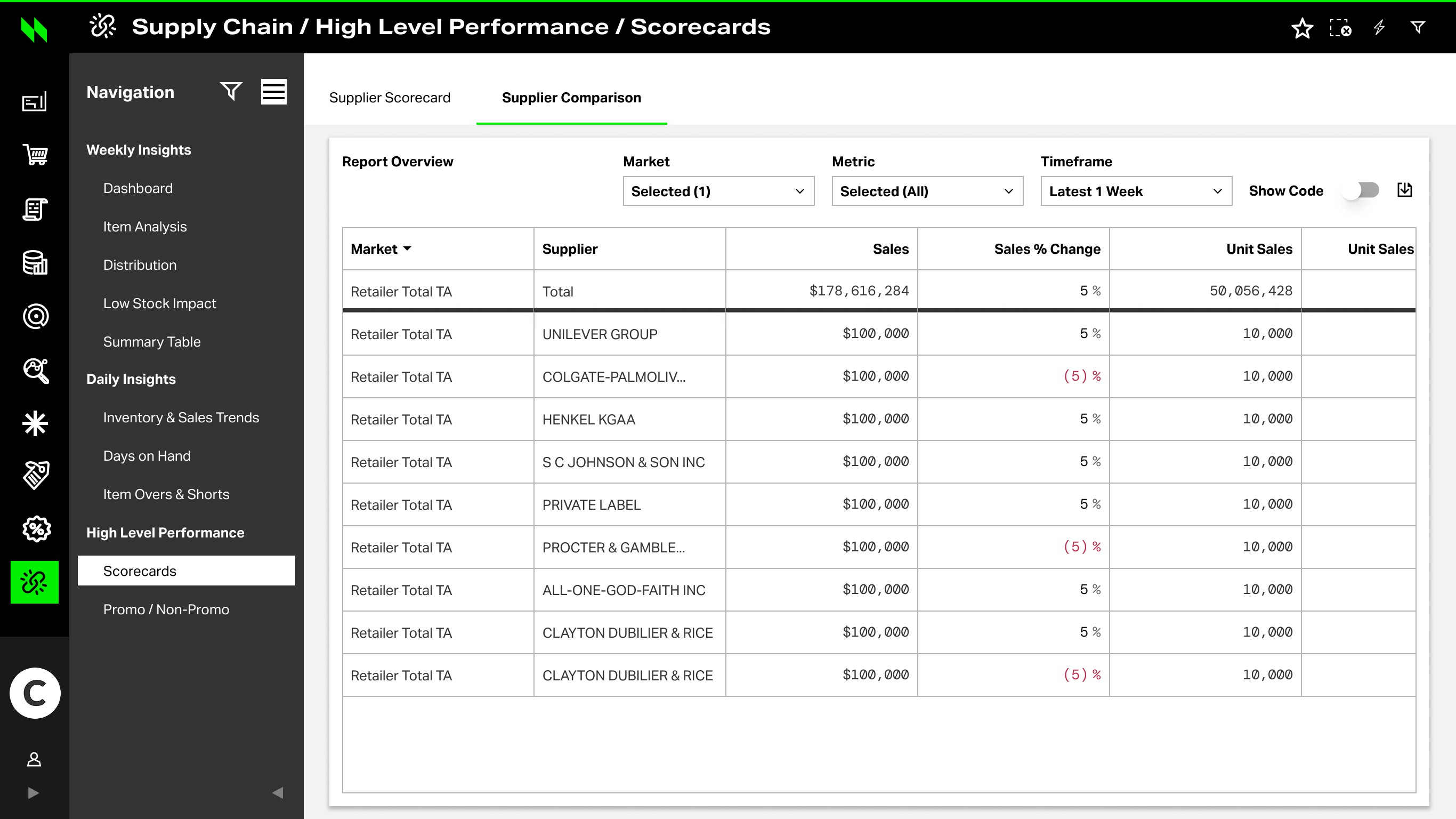
How I redesigned a legacy supply-chain reporting workflow into a configurable enterprise report — helping retail teams at Walmart, Rite Aid, and Sobeys analyze performance across product, store, and distribution hierarchies in one place.



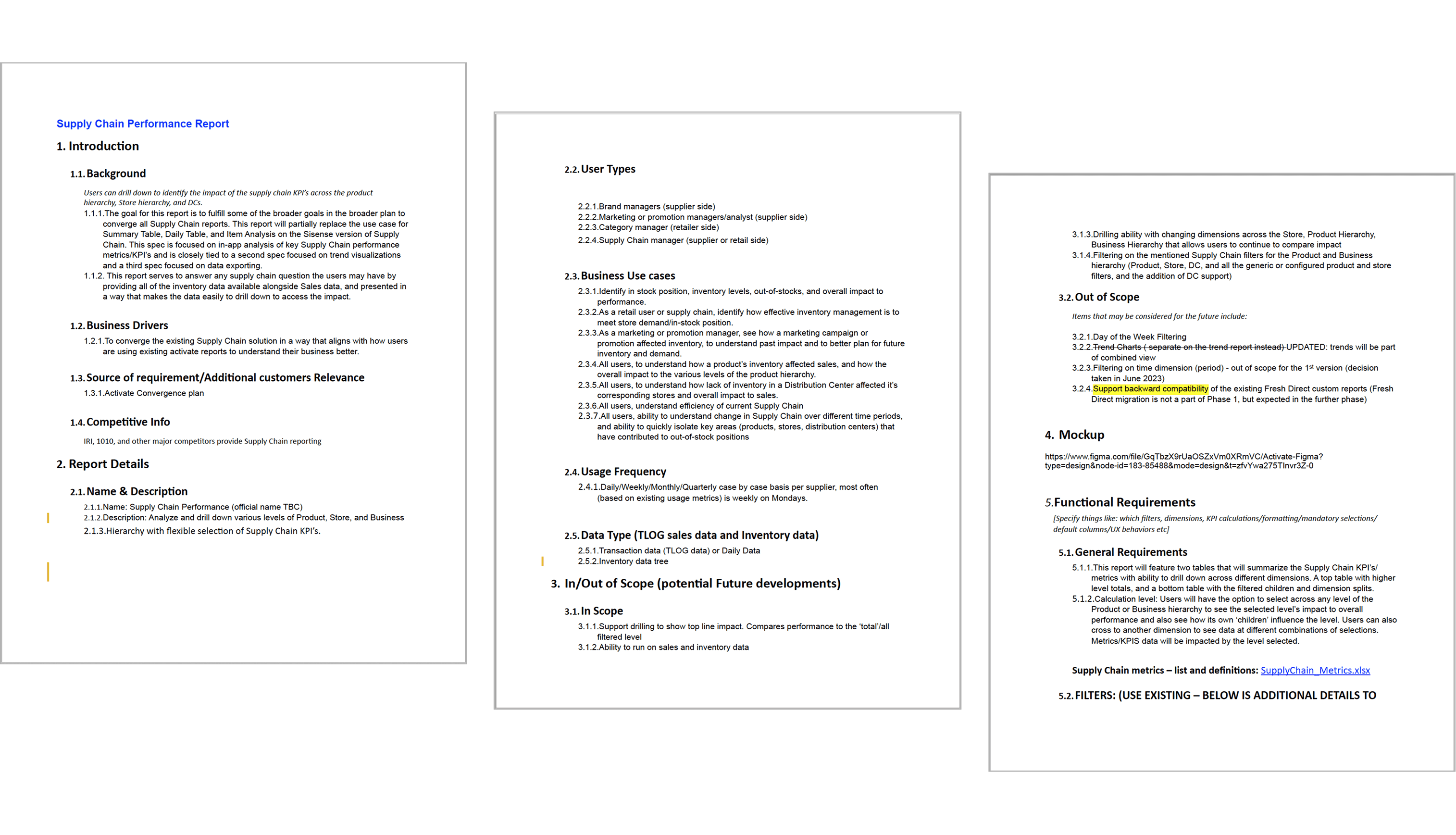
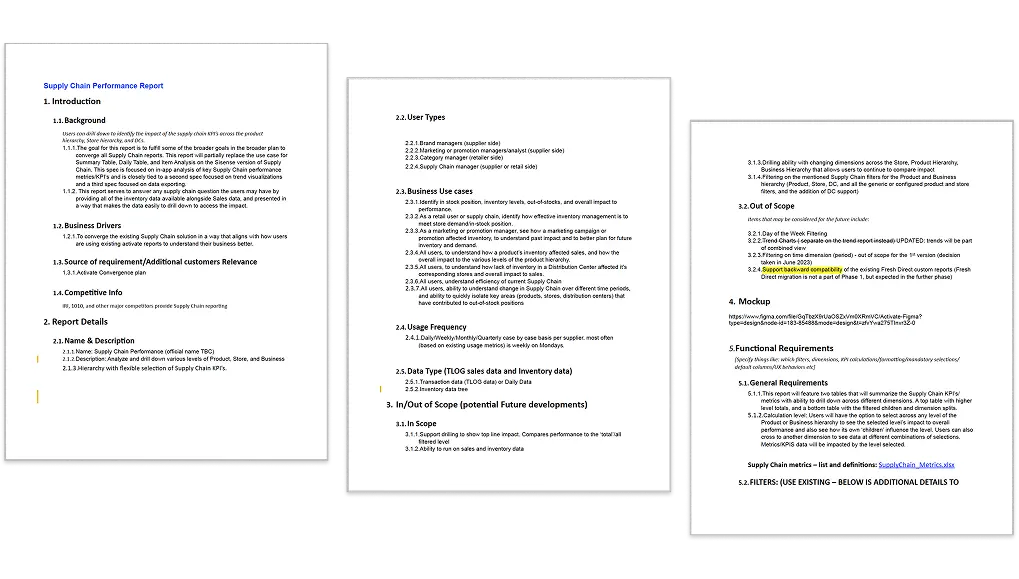
After NIQ's convergence efforts, supply-chain analysis still relied on multiple reports and legacy patterns. Users could answer important questions about in-stock position, inventory health, and sales impact, but only by navigating fragmented tools. This project focused on creating a more unified performance report: one that allowed users to compare top-line impact, drill across product, store, and DC hierarchies, and understand how inventory conditions were affecting sales and operational performance. This aligned closely with the product goal of converging older supply-chain reporting paths into a more modern Activate workflow.
Lead Product Designer
Research, UX, UI, information architecture, KPI structuring, prototyping, testing
Web application — Desktop-first enterprise reporting
Brand managers, promotion analysts, category managers, and supply chain managers across supplier and retailer workflows
Sales + inventory performance across product hierarchy, store hierarchy, and distribution centers
| Business Question | UX Response |
|---|---|
| Where are we underperforming? | →Surface KPI summary row first |
| What is the inventory impact? | →Unified sales + inventory view |
| Which child segments are driving it? | →Coordinated bottom-table breakdown |
| Is it product, store, or DC level? | →Flexible hierarchy selection model |
| What should teams investigate next? | →Continuation path to trend / export |
Discovery showed that the report was not failing because users lacked data. It was failing because different roles entered with different pressure: analysts needed faster root-cause paths, replenishment managers needed evidence for escalation, and reviewers needed confidence before a number became a QBR narrative.
Analysts knew the root-cause patterns. The bottleneck was navigation friction, dead-end filters, and repeated context rebuilding across Product, Store, and DC views.
Default to exceptions first, then preserve the full inventory path for deeper review.
Escalation was the recurring failure: a stockout seen on Tuesday could become Friday executive pressure without a clear evidence trail.
Add alert history, affected locations, and an exportable review snapshot.
Days on Hand and velocity looked precise even when store feeds were delayed or partial, so confidence had to sit beside the metric.
Put confidence states and calculation context directly beside key metrics.
Principle → interface behavior mapping
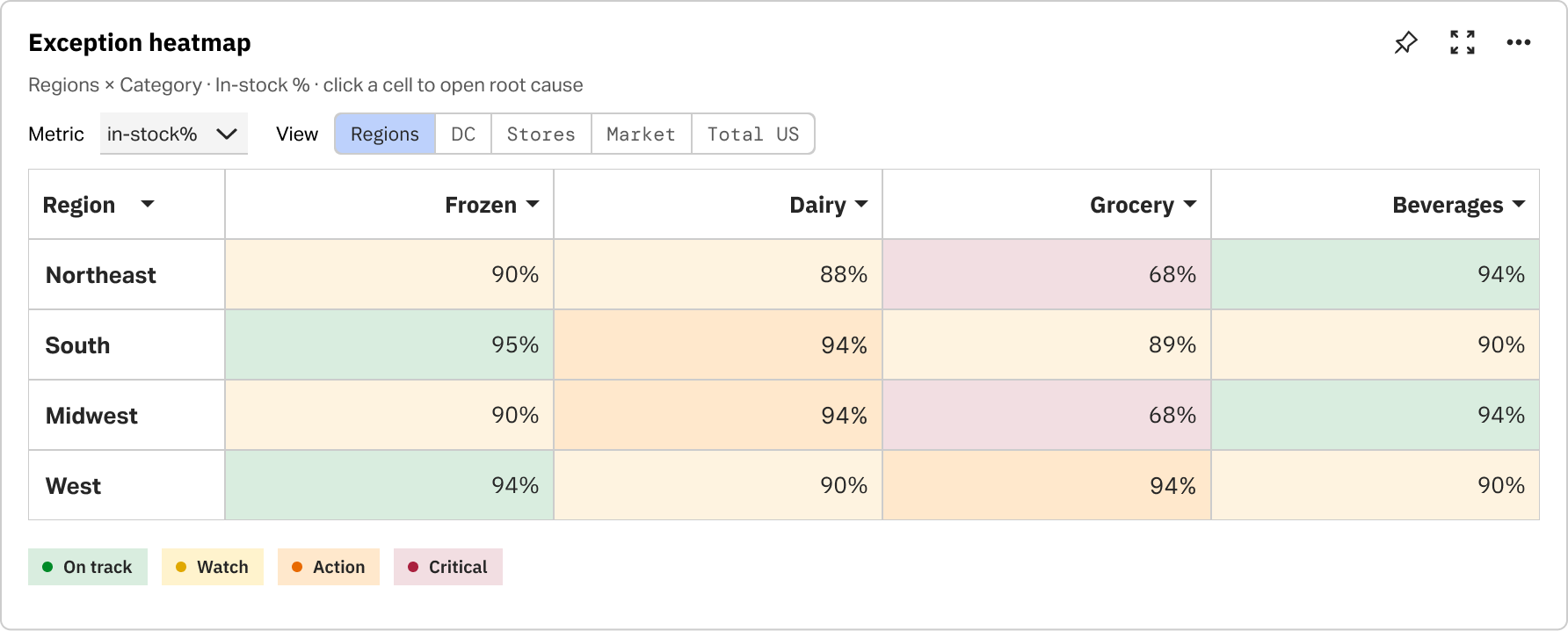
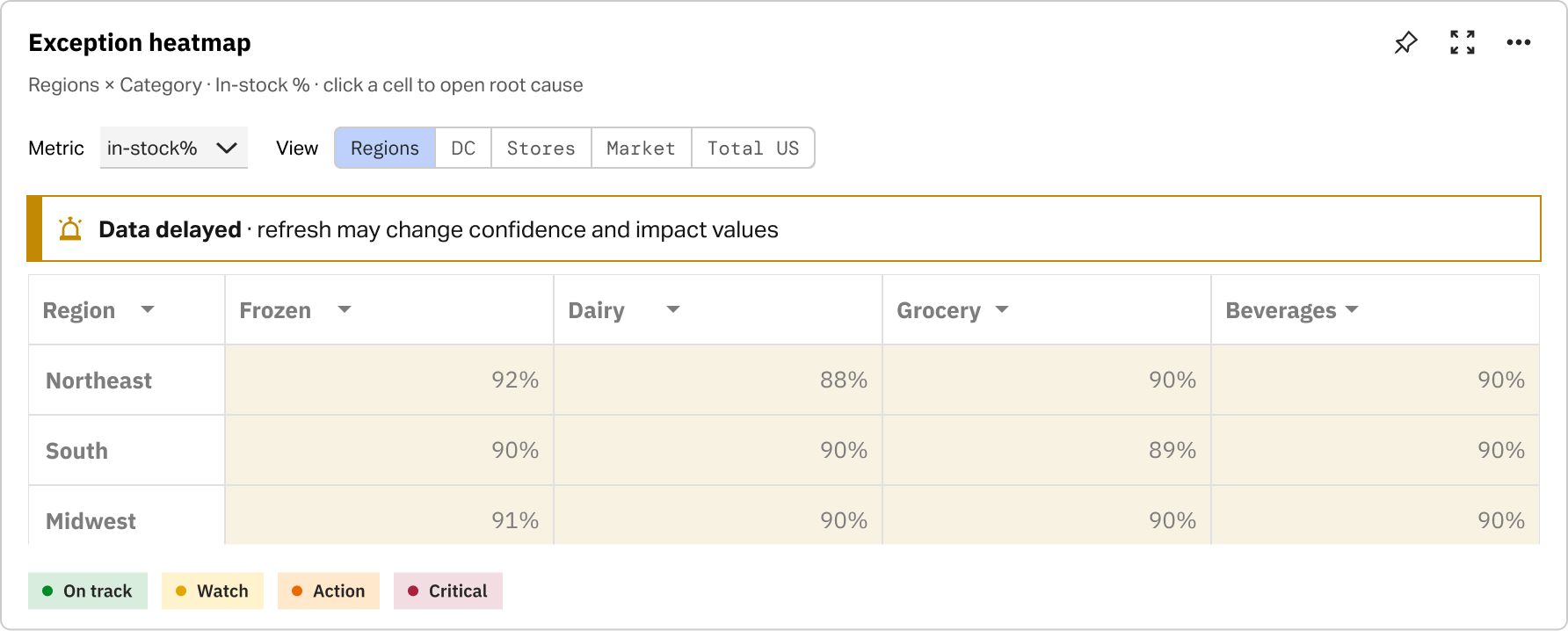
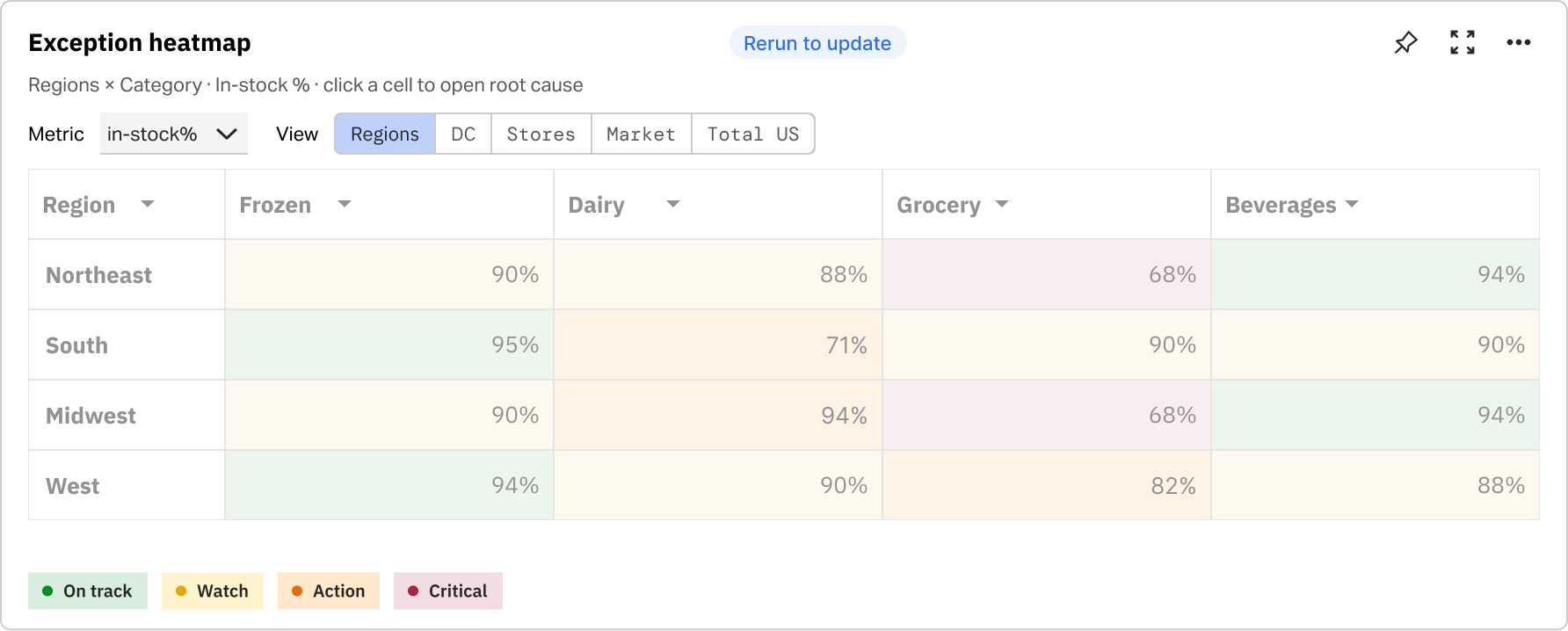
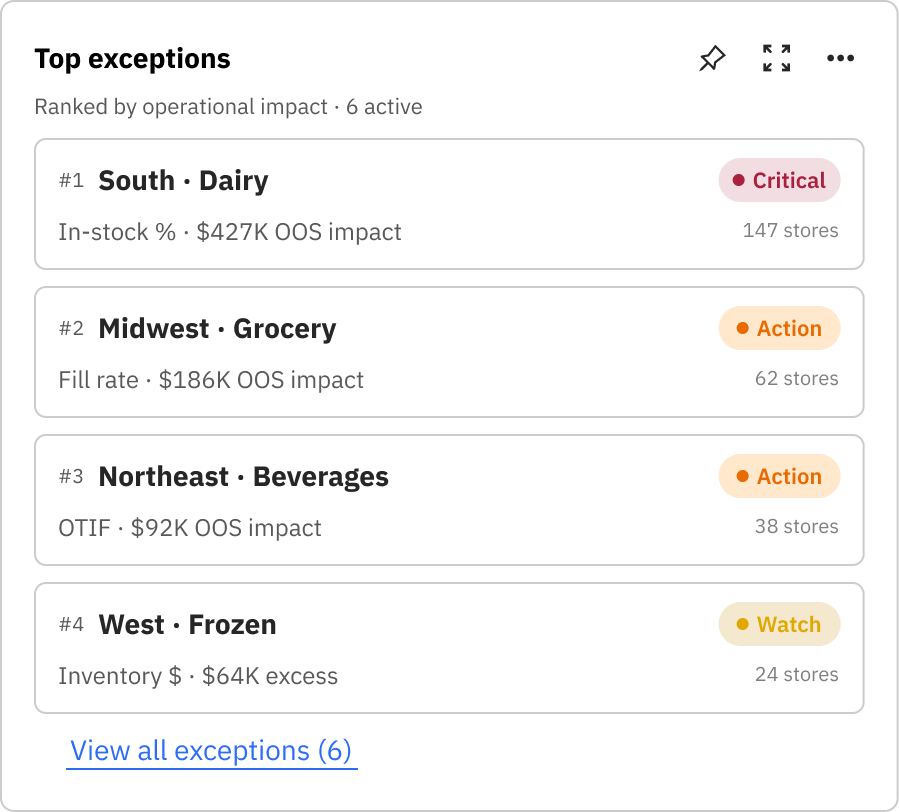
Surface stockout risk, overstock, and velocity anomalies before the full inventory table.
Interface behavior
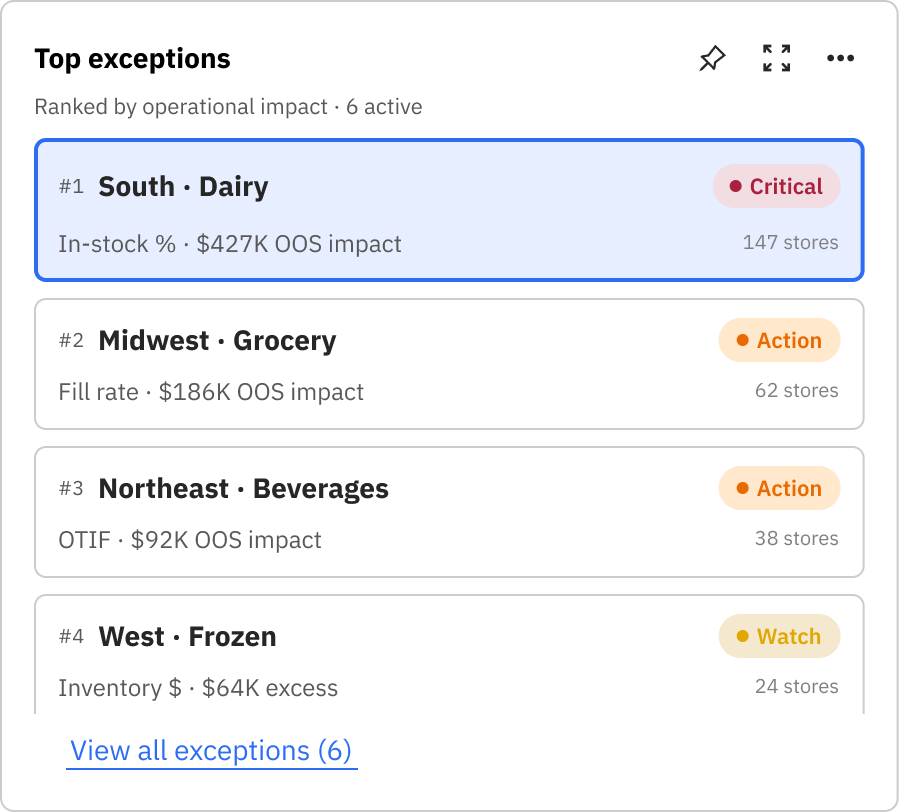
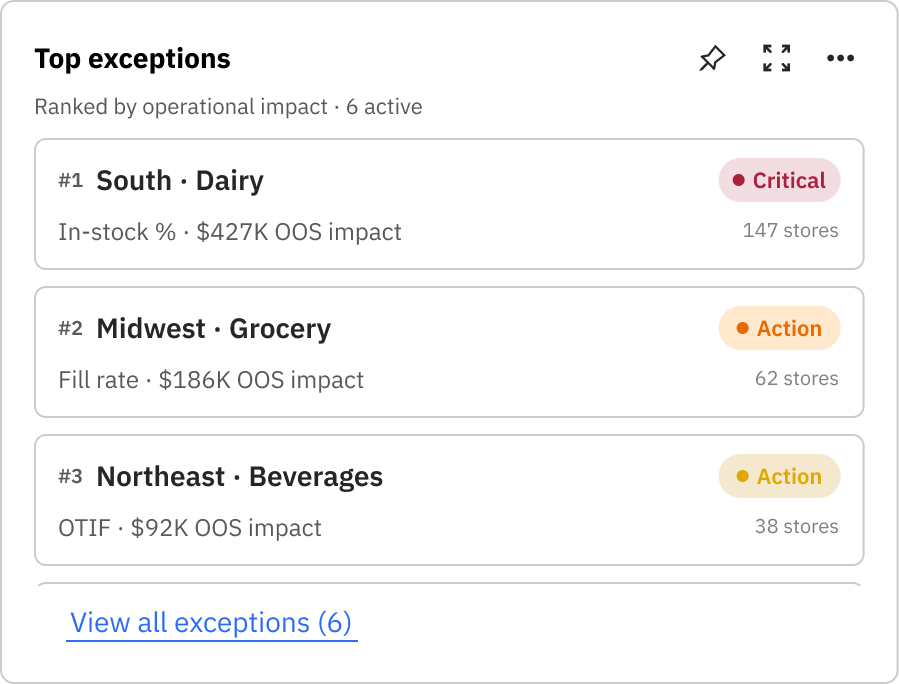
Exceptions panel prioritizes issues by impact score and confidence.
| Issue | Impact | Status |
|---|---|---|
| Stockout risk | 98 | Investigate |
| Overstock | 86 | Review |
| Velocity drop | 72 | Monitor |
Carry filters and hierarchy through Product → Store → DC drill-down.
Interface behavior
Path bar preserves context and active filters across levels.
Context preserved
Show prior period, YoY, benchmark, and peer-set comparisons before export.
Interface behavior
Comparison matrix is visible in-line with consistent metrics.
| Metric | Current | Prior | Signal |
|---|---|---|---|
| On hand | 12.4K | 11.8K | ↓ |
| Sales | $428K | $401K | ↑ |
| Velocity | 2.1 | 2.4 | ↓ |
Package issue, exposure, locations, confidence, and next action into a review snapshot.
Interface behavior
One-click snapshot compiles the right evidence and recommended action.
These principles map directly to decision moments in the supply chain: triage, investigate, compare, and escalate.
The report architecture was organized around a repeatable investigation path: start with exceptions, choose the right lens, drill into affected locations, and validate the finding before export.
| Issue | Impact | |
|---|---|---|
| Stockout risk · Dairy | 98 | |
| OTIF drop · Region West | 86 | |
| Velocity anomaly | 72 | |
| Overstock signal | 64 |
DecisionSurface the highest-risk exceptions before the full inventory table.
DecisionPreserve product, store, DC, period, and issue context.
| Location | Variance |
|---|---|
| Store #1142 | –4.2pp |
| Store #0891 | –2.1pp |
| Store #2204 | –0.8pp |
DecisionShow the operational driver behind the exception.
DecisionValidate the finding before it becomes review evidence.
The architecture preserved context across the path, helping users move from signal to evidence without rebuilding the investigation.
From investigation path to review-ready evidence
The report architecture became three production tabs — each designed to move users from signal to review-ready evidence without rebuilding context.
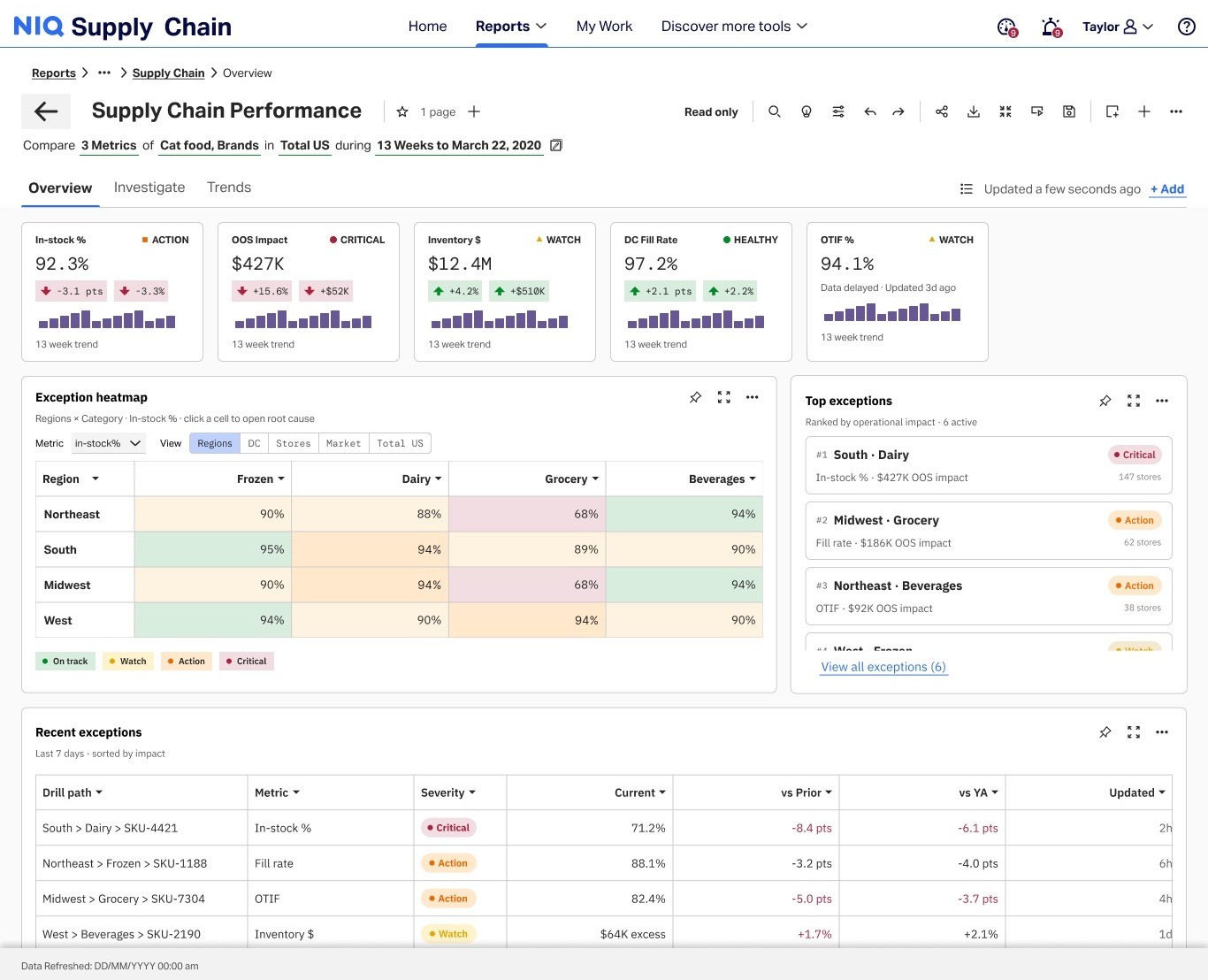
The overview tab became the business entry point for supply chain performance — helping category and operations teams see where risk is concentrated, which KPIs need attention, and what to review before drill-down or escalation.
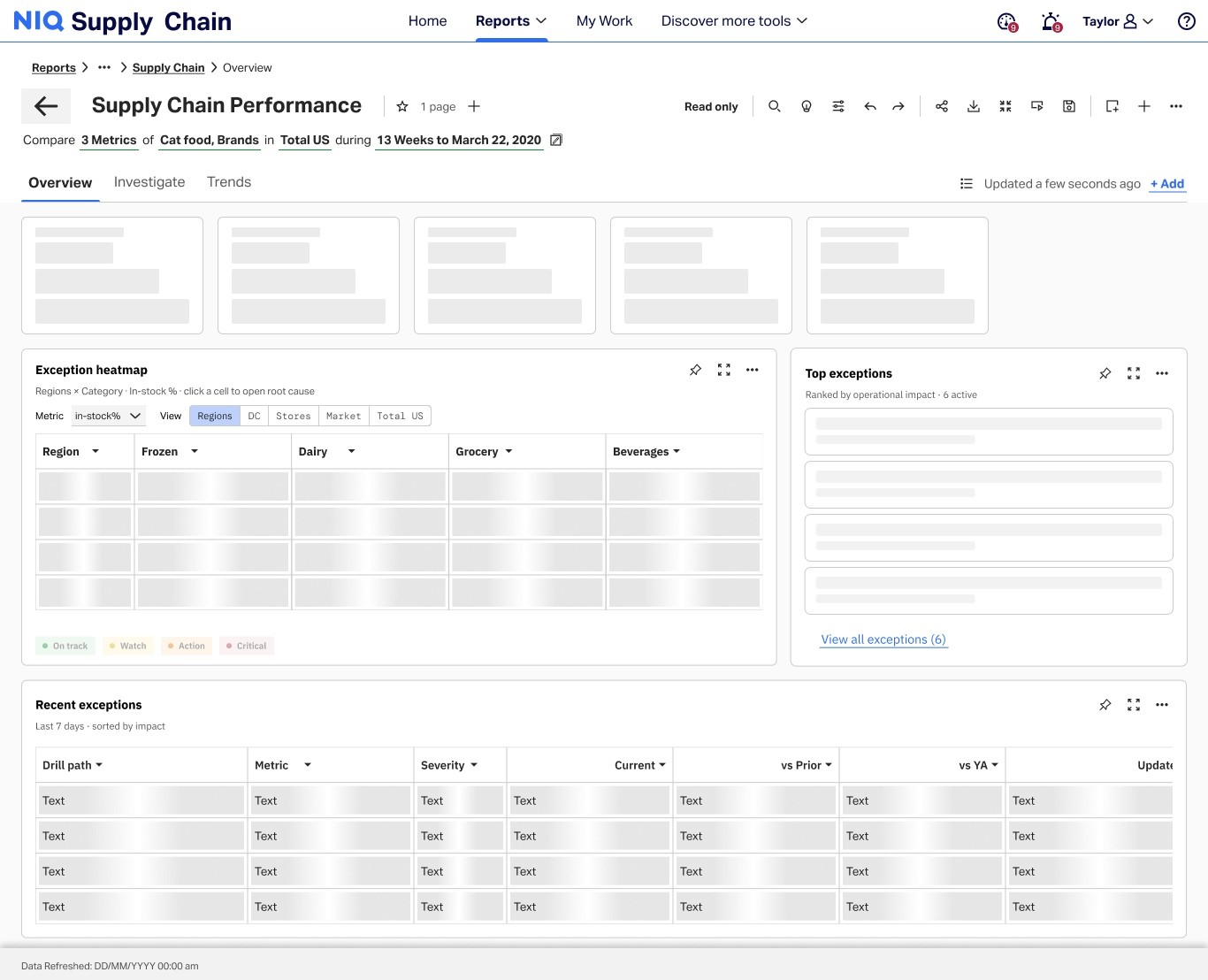
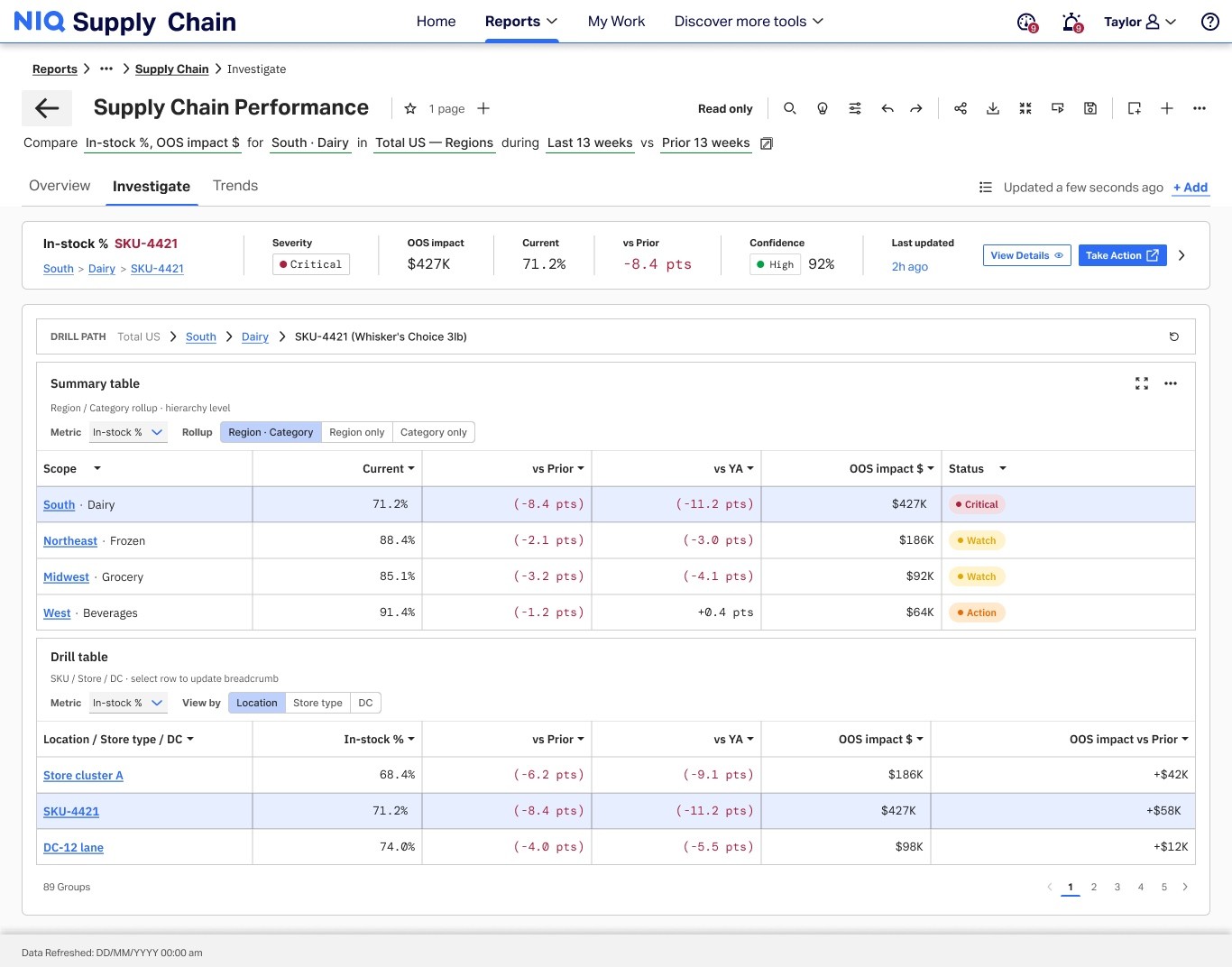
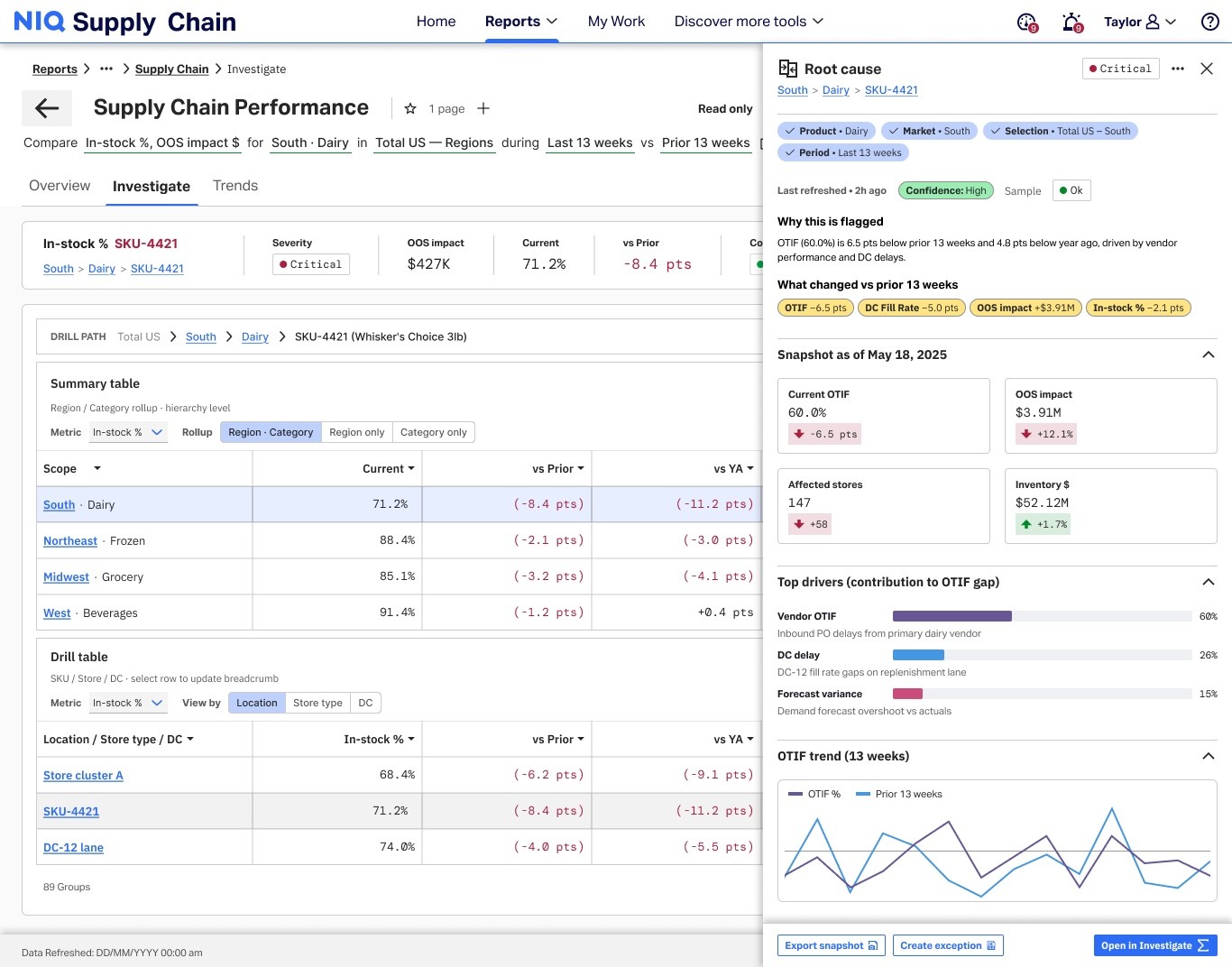
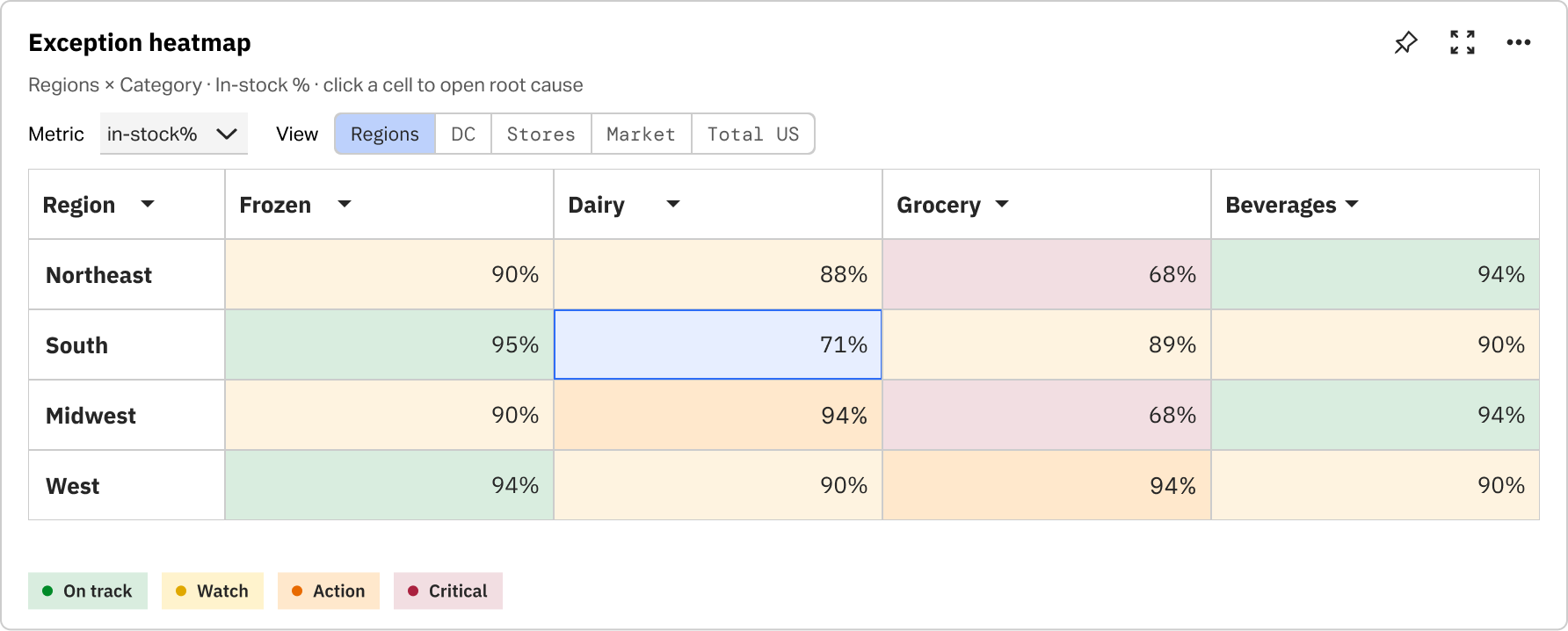
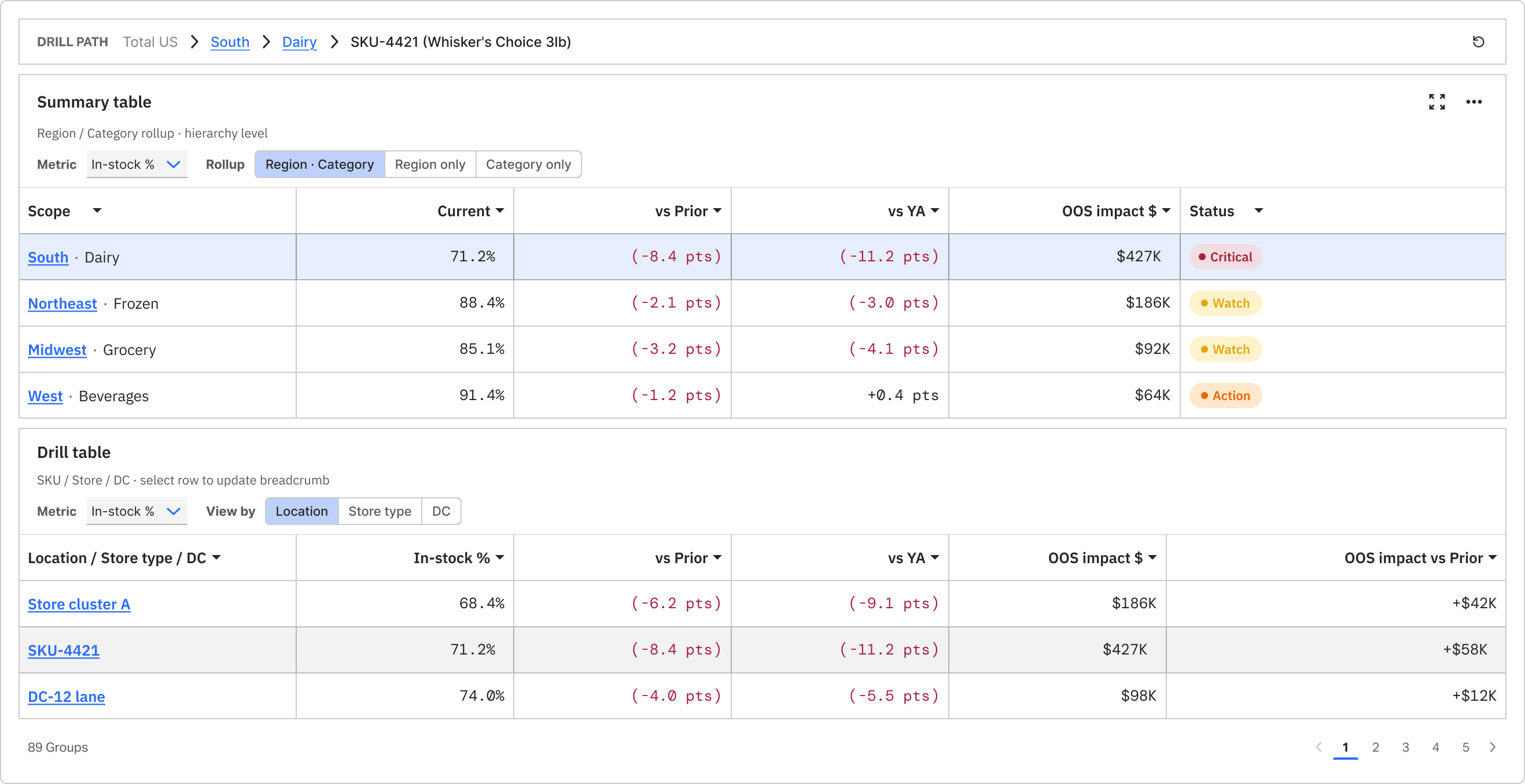
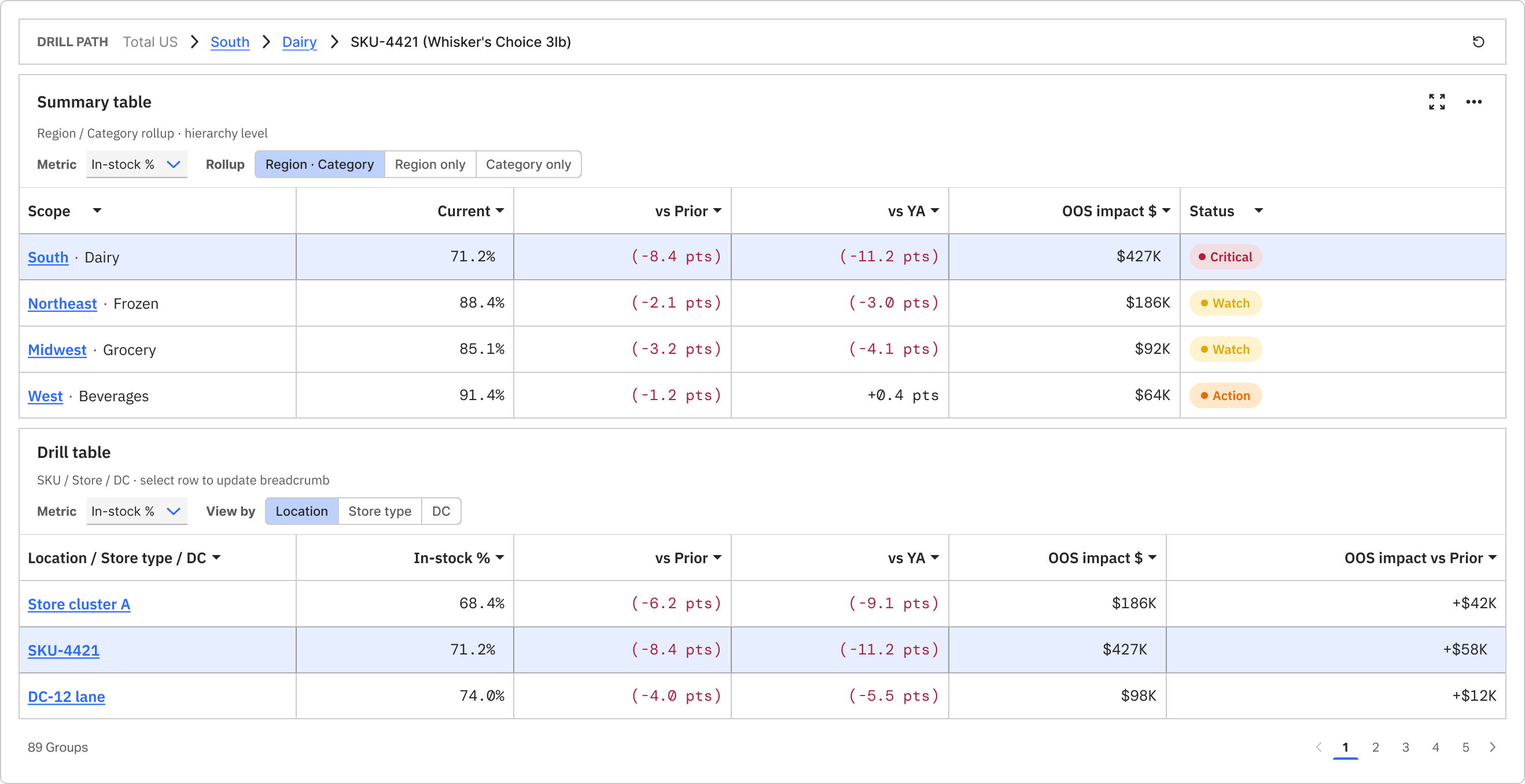
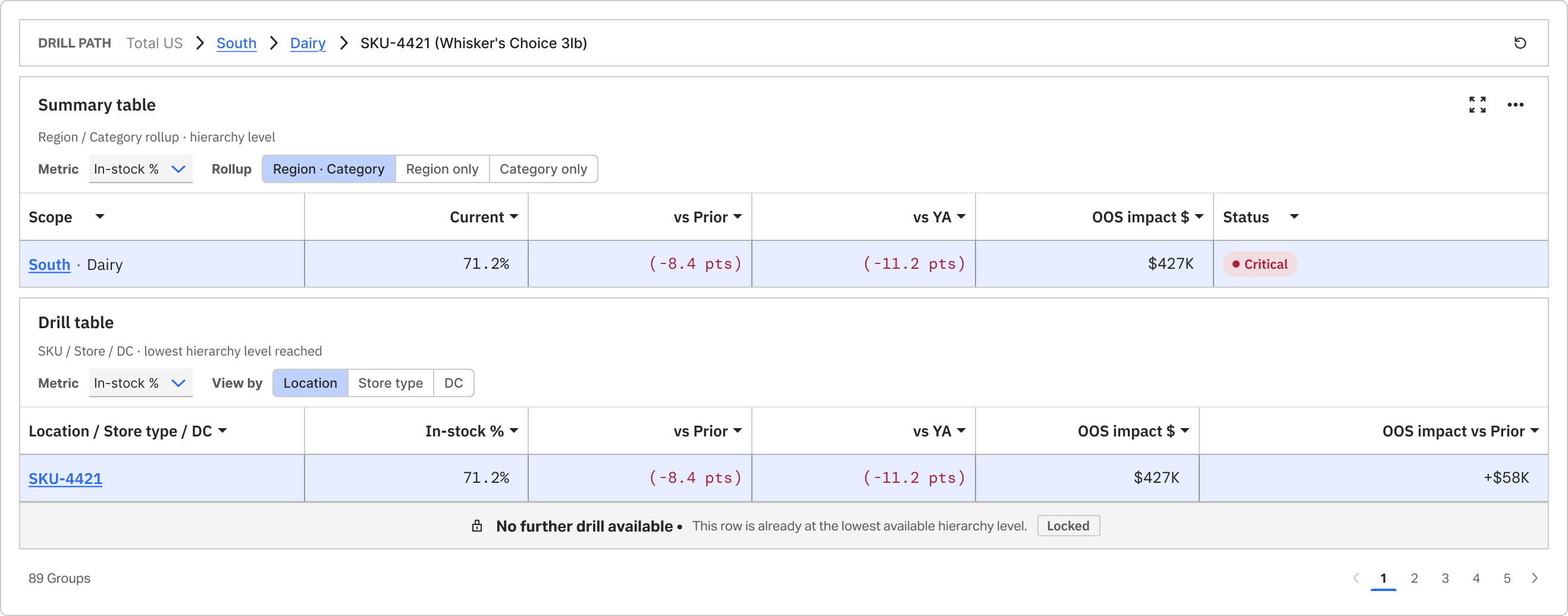
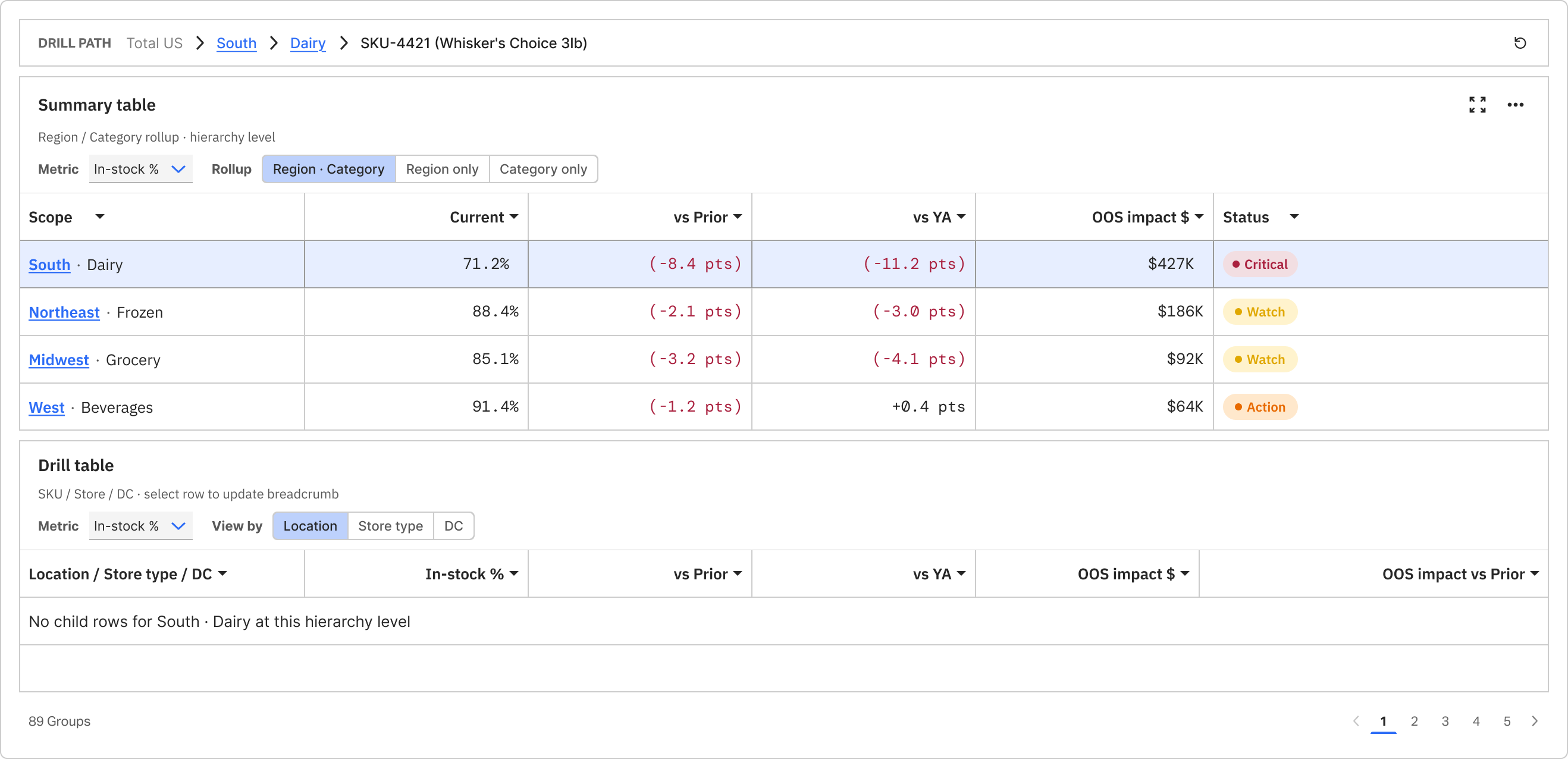
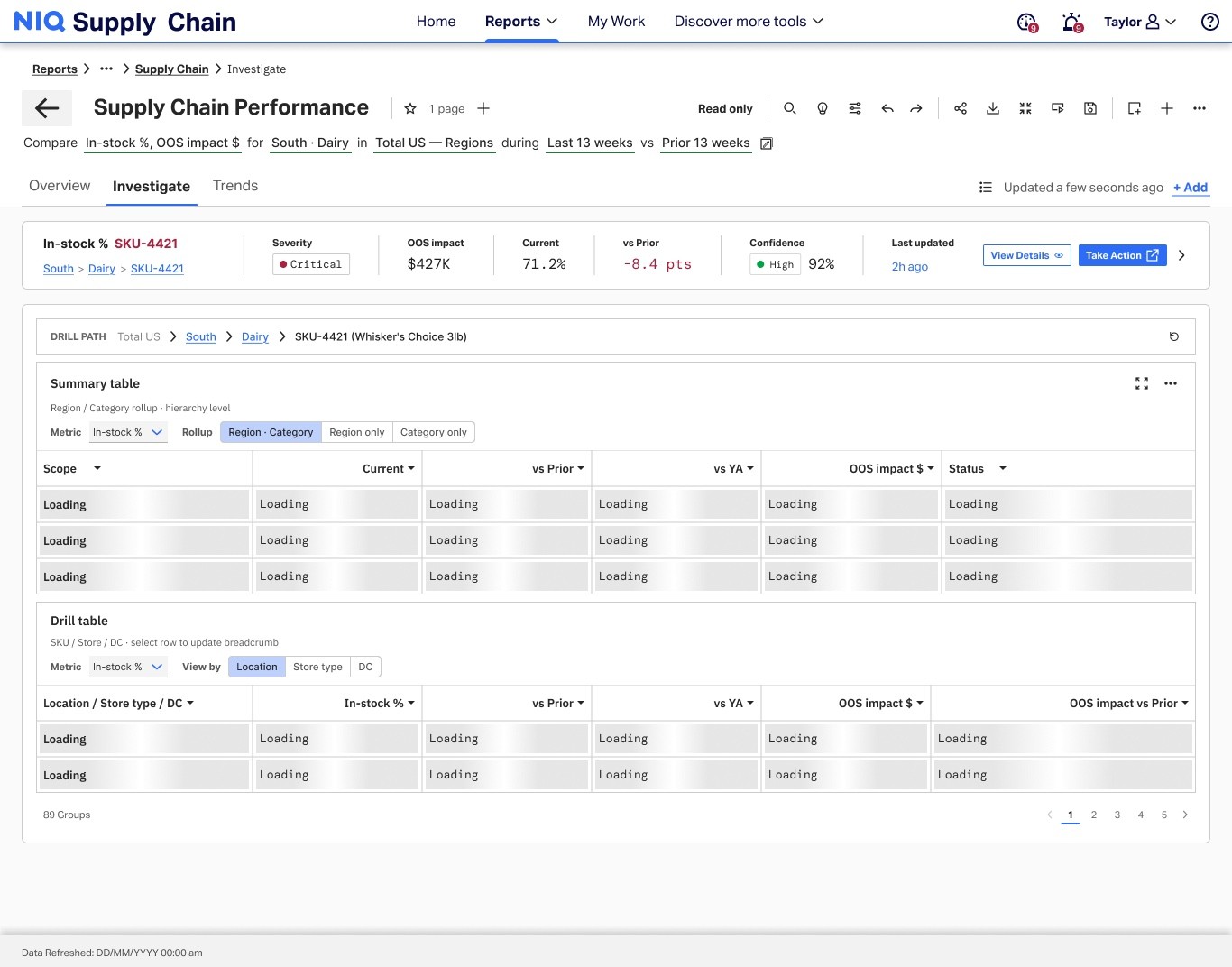
The investigate tab became the drill-down path from summary to root cause — helping analysts compare regions and categories in stacked tables, select an exception row, and open evidence in a persistent drawer without rebuilding context.
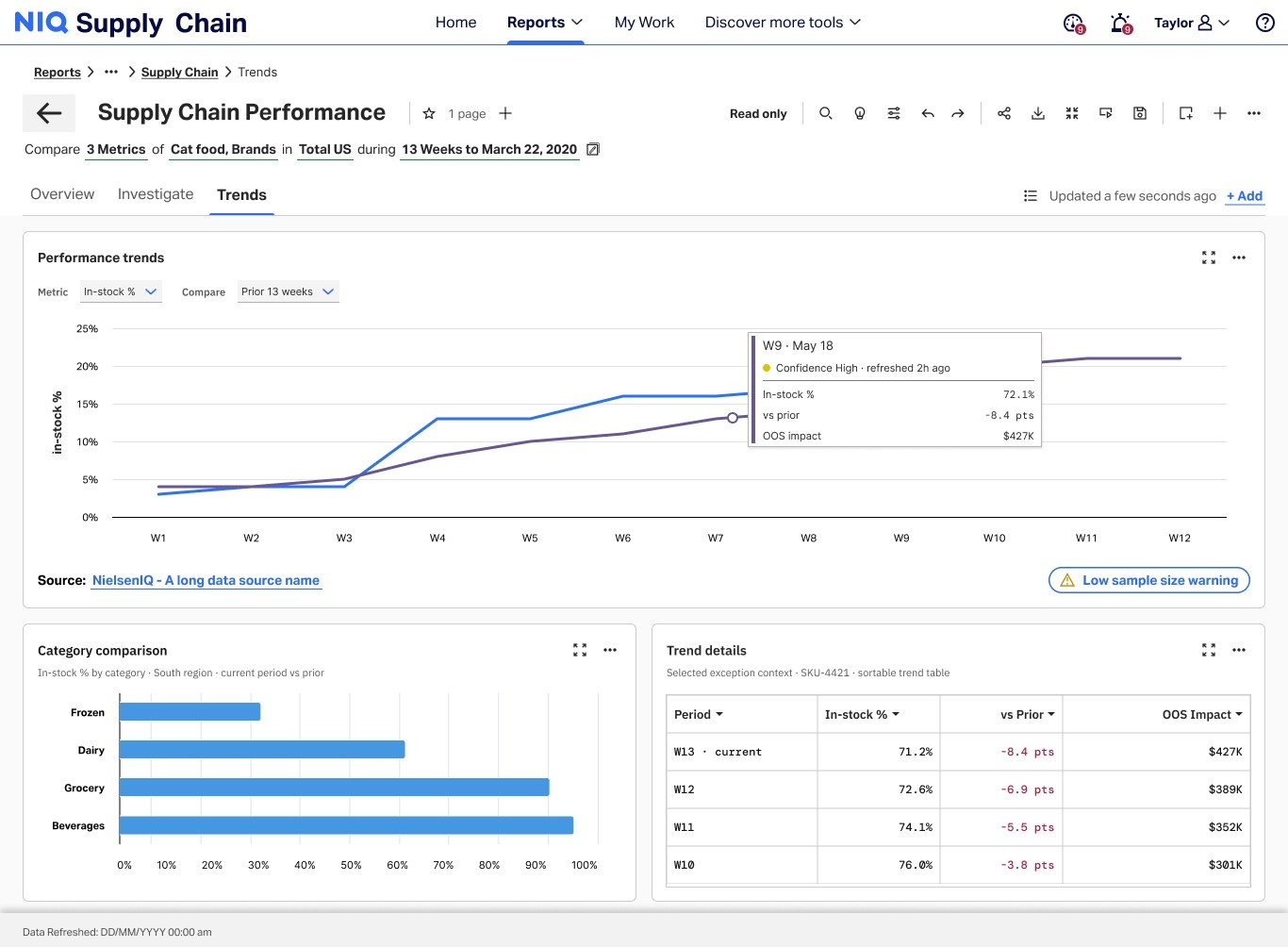
The trends tab became where teams validate signals over time — pairing multi-metric charts with hover tooltips that expose week-level in-stock and out-of-stock detail without leaving the report.
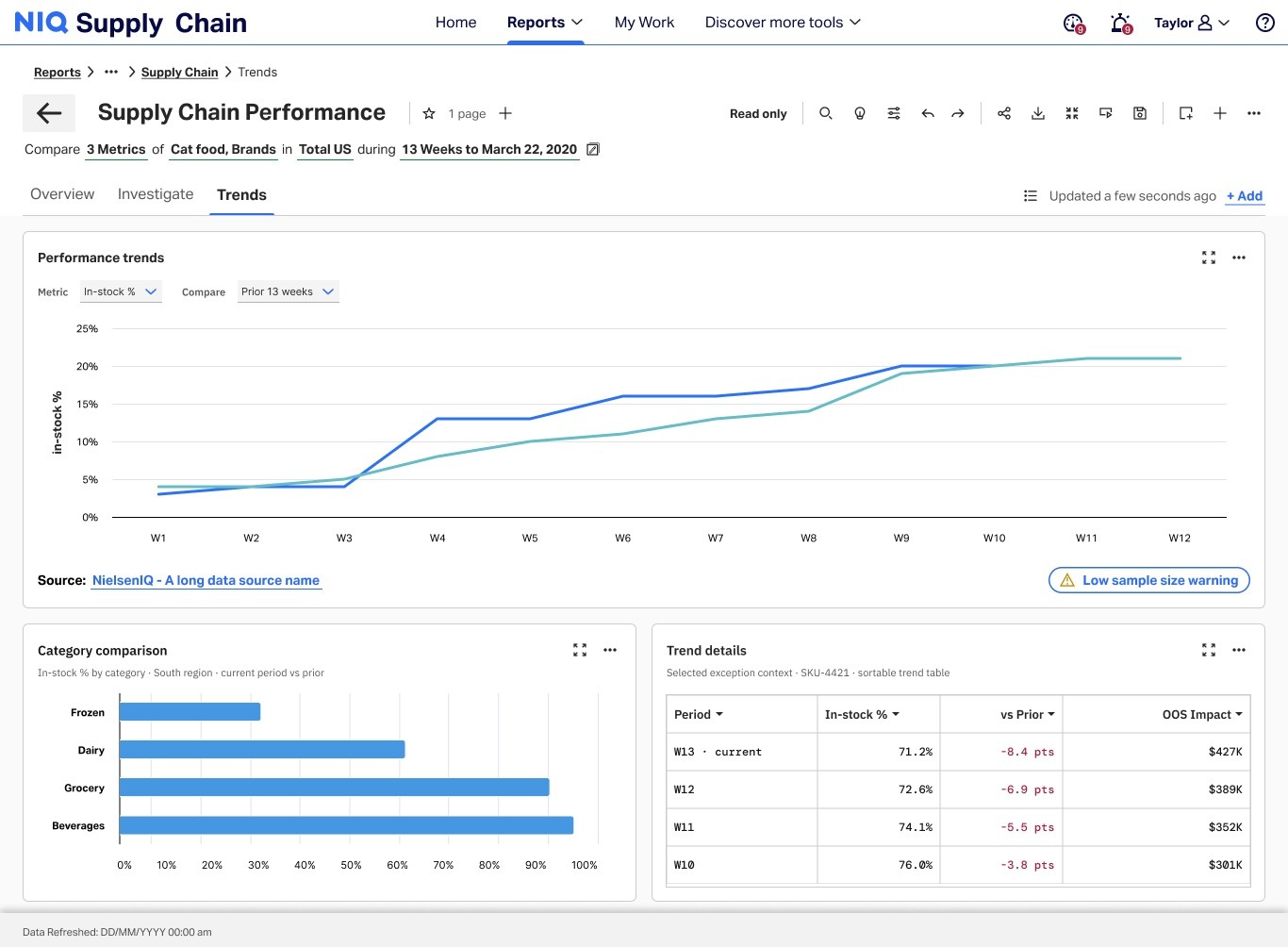
Full-width views from the NIQ Supply Chain Performance report — exception-first overview, investigate drill-down with root-cause drawer, and trends validation with hover detail.
What this work changed in my practice
This project strengthened my thinking around enterprise reporting systems: not just how to display metrics, but how to design for hierarchy logic, configurability, and analytical continuity.
In complex B2B tools, clarity comes less from removing complexity and more from structuring hierarchy logic, permissions, and analytical continuity well.
Defaulting to items needing attention now — stockout risk, velocity anomalies, DC concentration — reduced time-to-diagnosis versus legacy full-table entry.
Preserving product, store, DC, and period context across tabs stopped analysts from rebuilding the investigation path on every click.
Confidence states, escalation paths, and exportable snapshots matter as much as the charts — operational trust is designed, not assumed.
Next case study
A performance scorecard that helps retailers and suppliers align on KPIs, track efficiency, and drive better decision-making across global supply chains.